
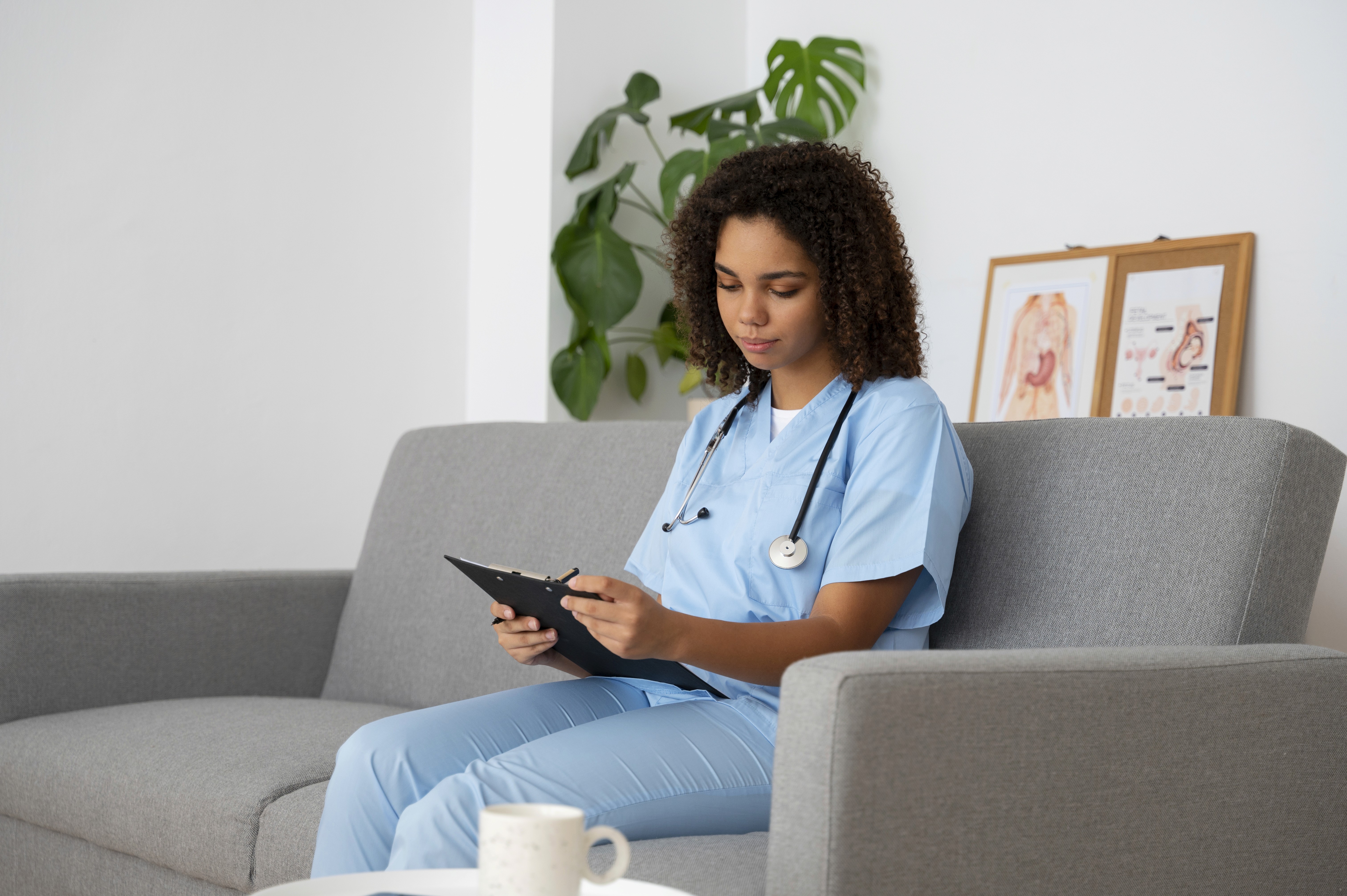
Not every medical situation needs an emergency room. The vast majority of situations that send Indian families rushing to hospitals — especially during evenings and weekends — are situations that can be handled just as effectively, and often far better, by a qualified professional in the comfort of your home.
Emergency rooms are designed for life-threatening crises. When you arrive at an ER with a fever, a wound, or an elderly parent who needs monitoring, you're consuming resources reserved for genuine emergencies and exposing your family to a high-infection environment that carries real risk for vulnerable patients. Althvyaa exists precisely for this middle ground: situations requiring professional medical attention, but not ER-level intervention. A qualified doctor, nurse, or paramedic at your doorstep within 30 minutes.
Situation 1: Your Elderly Parent or Grandparent Needs Regular Monitoring
India has over 140 million people aged 60 and above. Elderly individuals typically manage hypertension, diabetes, heart disease, and kidney problems — often on multiple medications simultaneously. Effective management requires regular monitoring: blood pressure checks, blood glucose readings, medication reviews, and periodic clinical assessment.
Taking an elderly parent to a clinic is enormously disruptive — arranging transport, managing mobility limitations, navigating waiting rooms. Home visits solve this completely. A nurse or doctor visits at a scheduled time, conducts monitoring, reviews medications for interactions and compliance, and provides recommendations — all in the elder's home where they are most comfortable and cooperative.
Situation 2: Post-Operative or Post-Hospitalisation Recovery
Modern hospitals discharge patients faster than ever. But early discharge creates a challenge — the patient still needs clinical care, just not in a clinical setting. Post-operative care involves wound assessment and dressing, drain management, pain assessment, IV medication administration, and physiotherapy. A home nurse visiting once or twice daily delivers this efficiently and catches early complications before they become readmissions. For families without clinical expertise, having a professional present even for 45 minutes daily transforms an anxiety-inducing recovery into a manageable process.
Situation 3: Your Child Is Sick and You Don't Want an ER Trip
A fever of 102°F in a three-year-old at 11 PM is frightening — but it is almost certainly a viral infection that will resolve with appropriate care. Rushing to a paediatric ER means a 1–3 hour wait in a room full of other unwell children, exposing your already-vulnerable child to additional pathogens.
A paediatric home visit is the right choice for fever, upper respiratory infections, ear infections, gastroenteritis, and mild allergic reactions. The doctor assesses temperature, respiratory rate, hydration status, throat and ear condition — and advises on care, hydration, and red flags to watch for. Children are far more cooperative at home, making clinical assessment both easier and more accurate.
Situation 4: Managing a Chronic Disease Flare-Up
When blood sugar crashes, blood pressure spikes, breathing becomes laboured, or a heart failure patient swells, families often default to the ER — even when the situation may be safely manageable at home with professional assessment. A home visit from a doctor or paramedic answers the critical clinical question in real time: Is this dangerous or manageable? The professional assesses severity, administers first-line treatment at home if appropriate, adjusts medications, and determines clearly whether hospital escalation is warranted.
For patients with chronic conditions, a standing arrangement for regular home monitoring — weekly nurse visits — proactively prevents flare-ups by catching problems before they escalate.
Situation 5: Injuries That Need Professional Care but Not an ER
Not all injuries warrant an ER, but some require professional care beyond a first-aid kit. These include:
Deep lacerations needing suturing or wound closure strips
First and second-degree burns requiring professional dressing and infection monitoring
Sprains and musculoskeletal injuries needing assessment, taping, and early physiotherapy
Post-trauma wound monitoring and regular dressing changes
Workplace and domestic injuries that are commonly either over-managed (full ER trip) or under-managed (ignored)
Situation 6: Mental Health Support and Therapy at Home
Mental health care is one of the most critically underserved areas in Indian healthcare. India has approximately 0.3 psychiatrists per 100,000 people — among the lowest ratios globally. For many people, the barrier to accessing mental health care is not financial or geographic — it is psychological. The fear of being seen entering a mental health clinic. The anxiety of an unfamiliar clinical environment.
Home-based mental health visits remove these barriers systematically. A therapist visits at home providing individual therapy, anxiety and stress management, depression support, grief counselling, family therapy, and psychiatric medication monitoring — in an environment the patient controls, free from the social exposure that prevents many people from seeking help.
Situation 7: Post-Partum and New Mother Care
The weeks following childbirth are among the most medically and emotionally complex of a woman's life. Post-partum home visits can include wound assessment for C-section or episiotomy, infection monitoring, breastfeeding support and lactation guidance, newborn weight monitoring, screening for post-partum depression and anxiety, and blood pressure monitoring for post-partum hypertension.
Visiting a clinic with a newborn in the days after birth is logistically challenging and carries real infection risk for an immunologically immature baby. Home visits by trained nurses or midwives provide the professional support new mothers need in the most appropriate environment — their own home.
How to Decide: Home Visit or Ambulance?
The clearest way to think about this: if the person is conscious, breathing, and stable — even if unwell and needing professional attention — a home visit is almost always the right first step. If the person is unconscious, unresponsive, in severe respiratory distress, showing signs of cardiac arrest, or there is major uncontrolled bleeding — call 112 immediately.
Simple framework: Breathing, conscious, stable? Urgent but not immediately life-threatening? Book Althvyaa — professional arrives in 30 minutes. Unconscious, unresponsive, signs of cardiac arrest, or major trauma? Call 112. Genuinely uncertain? Book Althvyaa — the professional will tell you clearly if hospital escalation is needed.
Frequently Asked Questions
Can I book for a routine annual check-up? Yes — physical examination, blood pressure and glucose checks, and lab sample collection can all be arranged at home.
Is home healthcare appropriate for elderly patients with dementia? Yes — and often superior. Familiar environments significantly reduce confusion, agitation, and distress in dementia patients.
Can I get blood tests done at home? Yes. Sample collection for common blood tests is available, with results delivered digitally.
Conclusion
The emergency room is a triumph of modern medicine — but it is designed for emergencies. For the vast category of medical situations that sit between 'manage alone at home' and 'genuine life-threatening crisis,' home healthcare is faster, safer, more comfortable, and more cost-effective. With Althvyaa, a qualified healthcare professional is at your door within 30 minutes — available for elderly monitoring, post-operative recovery, sick children, chronic disease flare-ups, injuries, mental health support, and post-partum care. Download the Althvyaa app and book your first home visit today.