
When illness strikes, most Indian families default to one of two responses: rush to the nearest hospital, or try to manage at home and hope for the best. But there is a third option that is rapidly gaining ground — booking a qualified healthcare professional for a home visit. This guide breaks down the comparison between home healthcare and a hospital visit across every dimension that matters: safety, cost, quality of care, speed, and the emotional experience of being a patient.
What Is Home Healthcare — and What It Is Not
Home healthcare is not managing a condition by yourself. It involves qualified medical professionals — doctors, nurses, paramedics, physiotherapists — coming to your home to deliver clinical care. Through Althvyaa, a healthcare professional arrives within 30 minutes with appropriate equipment, providing the same standard of care as a clinic — in your home environment. Services include medical consultations, wound dressing, IV therapy, vital sign monitoring, physiotherapy, paramedic assessment, and chronic disease management.
When Home Healthcare Is Clearly the Better Choice
Elderly patients requiring regular care
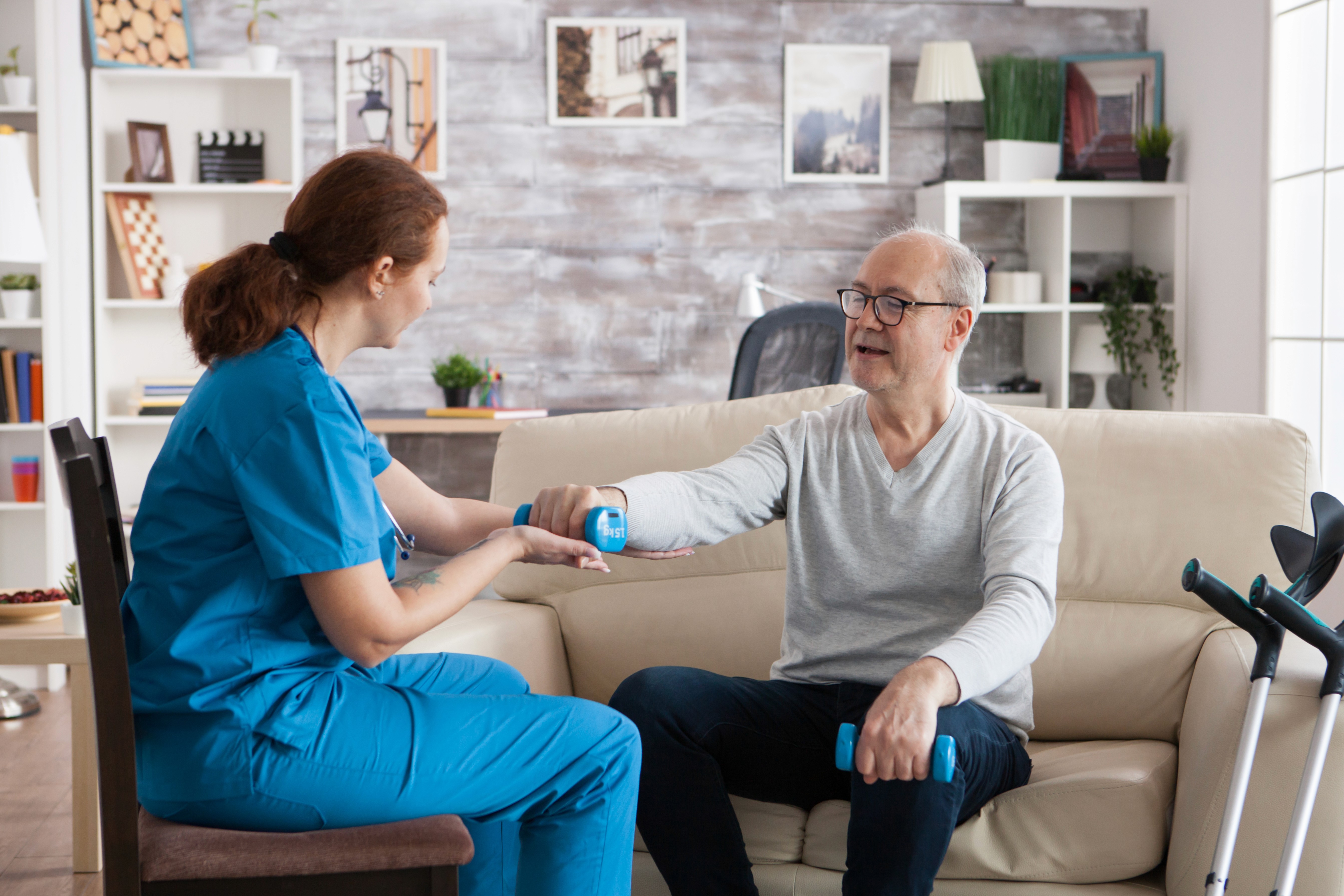
Hospital visits are physically and psychologically taxing for older adults. For elderly patients who need regular monitoring — blood pressure, blood glucose, medication reviews — home visits are superior in almost every way. Research shows elderly patients receiving home-based care demonstrate better medication compliance, lower readmission rates, and significantly higher satisfaction with their care experience.
Post-operative recovery
After surgery, patients need ongoing clinical attention: wound monitoring, dressing changes, drain management, pain assessment, and medication administration. A home nurse visiting once or twice daily delivers this care efficiently and comfortably — while eliminating hospital-acquired infection risk that daily outpatient visits would carry.
Chronic disease management
For patients with diabetes, hypertension, COPD, or heart failure, consistent home monitoring allows problems to be caught early — before they become hospitalisations. This proactive approach reduces ER visits and improves long-term disease control in ways that infrequent hospital visits cannot replicate.
Paediatric illness and minor injuries
Sick children do best in their own beds. A paediatric home visit prevents exposure to other unwell patients and makes clinical assessment easier because children are more cooperative at home. For minor injuries — deep cuts, burns, sprains — home visits save a three-hour ER wait for a situation that requires 15 minutes of professional attention.
When You Must Go to a Hospital
Hospital care is non-negotiable for: life-threatening emergency symptoms (possible heart attack, stroke, unconsciousness, major blood loss, or suspected spinal injury); advanced diagnostic equipment needs (CT, MRI, X-ray); surgery or anaesthesia; ICU-level monitoring and support. The core principle: home healthcare excels for urgent but clinically manageable situations. Hospitals are for emergencies, complex diagnostics, surgery, and high-dependency care.
The Comprehensive Comparison
Cost
Hospital visit: consultation ₹500–₹2,500 + facility charges + transportation + lost wages = ₹3,000–₹6,000 total for a non-emergency. Home healthcare: ₹500–₹1,500 for a physician visit, all-inclusive, no transport costs. Home healthcare is typically two to four times more cost-effective for non-emergency situations.
Time
Hospital visit: 2–5 hours total (travel + registration + waiting room + consultation + pharmacy). Home healthcare: 3 minutes to book, professional arrives in 30 minutes, visit takes 30–60 minutes. Total elapsed time under 90 minutes, the patient never leaving their home.
Quality of care
Hospitals win for complex, high-acuity conditions with specialist access and advanced diagnostics. Home healthcare often wins for routine, monitoring, and chronic disease management — with one-on-one, undivided professional attention, personalised guidance, and medication review in context.
Safety
Hospital-acquired infections (HAIs) affect 7–10% of patients in developed-country hospitals — a figure that rises in resource-constrained settings. Home healthcare eliminates this exposure risk, making it significantly safer for immunocompromised patients, surgical recovery, newborns, and the elderly.
Emotional experience
Hospitals are stressful, impersonal, and disorienting for elderly and anxious patients. Home healthcare is comfortable, familiar, and personal. Research consistently shows patients in familiar settings experience less stress, cooperate better with assessment, and recover more effectively.
A Practical Decision Framework
Go to hospital or call 112 when:
The person is unconscious, unresponsive, or in severe distress
Signs of heart attack, stroke, or major neurological event
Major uncontrolled bleeding or severe trauma
Urgent imaging (CT, MRI, X-ray) or surgery is needed
Book a home visit through Althvyaa when:
The person is conscious and stable but needs urgent professional assessment
You need wound care, injections, IV therapy, or vital sign monitoring
Managing a chronic condition requiring regular monitoring
An elderly family member needs care but cannot travel easily
A child is unwell — urgent but not critical
Post-surgical or post-hospitalisation recovery care is needed
Frequently Asked Questions
Is home healthcare safe for serious conditions? Yes — professionals are trained to recognise when a situation exceeds home care capabilities and to escalate immediately.
Is Althvyaa available around the clock? Yes. Althvyaa operates 24 hours a day, seven days a week.
Does health insurance cover home healthcare visits? Many health insurance policies in India now include home healthcare coverage. Check your specific policy or contact your insurer.
Conclusion
The binary choice between 'go to hospital' and 'manage alone at home' is no longer the only option available to Indian families. Home healthcare — delivered by qualified professionals within 30 minutes through Althvyaa — is faster, more affordable, more comfortable, and clinically equivalent for the vast majority of non-emergency medical situations. Use hospitals for what they are designed for: emergencies, complex diagnostics, and high-dependency care. Use home healthcare for everything else. Download the Althvyaa app and experience the smarter way to access healthcare in India.